Smoking, vaping, alcohol, sugar, screens, procrastination and the habits you want to build. Type your question, get a straight, kind answer in seconds β no judgement, ever. The full personal report costs less than a cup of coffee: $2.95.

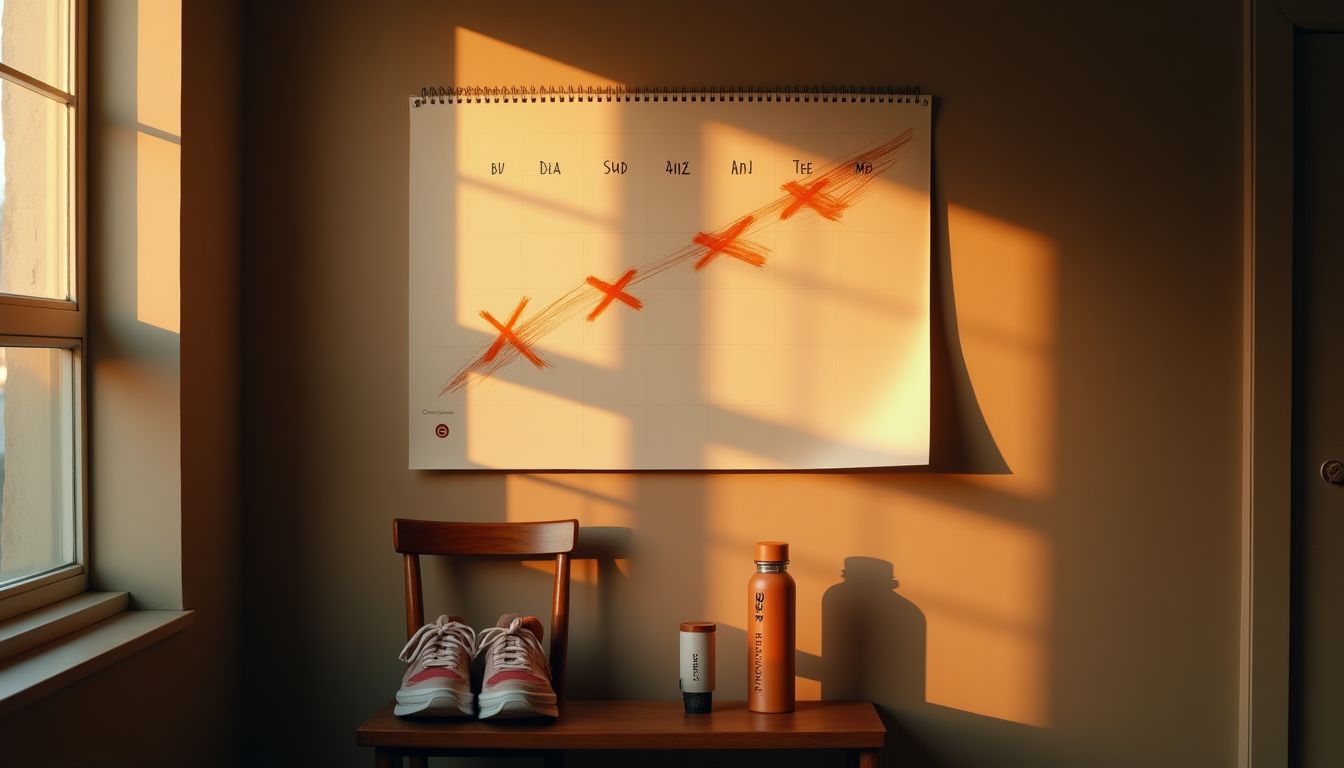
Habits form through repetition in a stable context β cue, routine, reward β not through motivation, which is why the same people can reliably floss and yet fail to 'get to the gym more'. This guide builds the full loop: shrink the habit until the first step takes under two minutes, attach it to a cue you never skip, make the environment do the work, and track the streak visibly. The research on automaticity (66 days on average) becomes a map instead of a threat.
The cue-routine-reward system for building any habit β tiny versions, fixed cues, environment design and the tracking that makes it automatic.
Lally et al. (2010) found an average of 66 days to automaticity, with a wide range of 18 to 254 days depending on the habit and person. The popular 21-day figure is a myth; the practical takeaway is that your pace is your pace, and consistency beats intensity.
Because motivation is the wrong engine β it peaks and dips, while habits run on cue and context. If the habit is failing, the design is failing: the first step is too big, the cue is not fixed, or the environment is full of friction.
A concrete if-then plan β 'when I finish my coffee, I will write one line in my journal'. Studies find if-then plans roughly double follow-through compared with vague intentions like 'I will journal more'.
Every tool answers instantly from our own knowledge and calculators — educational only, never a diagnosis, and never shame-based. Want the deeper, personalised version? Each has a $2.95 full report.